
Rugged, sub-4m, and loaded with a petrol-hybrid-EV powertrain trio — the Bridger concept signals Renault’s most ambitious India play yet, headed to showrooms by end-2027.
Renault Bridger — Key Highlights at a Glance
- Sub-4 metre boxy SUV, slots between Kiger and Duster
- 200mm ground clearance, 18-inch alloy wheels
- 400 litres of boot space — 10L more than the Kia Syros
- Petrol, strong hybrid and EV powertrains confirmed
- Built on Renault’s modular R-GMP platform
- Made in Chennai; India launch by end of 2027
Bold Design That Means Business
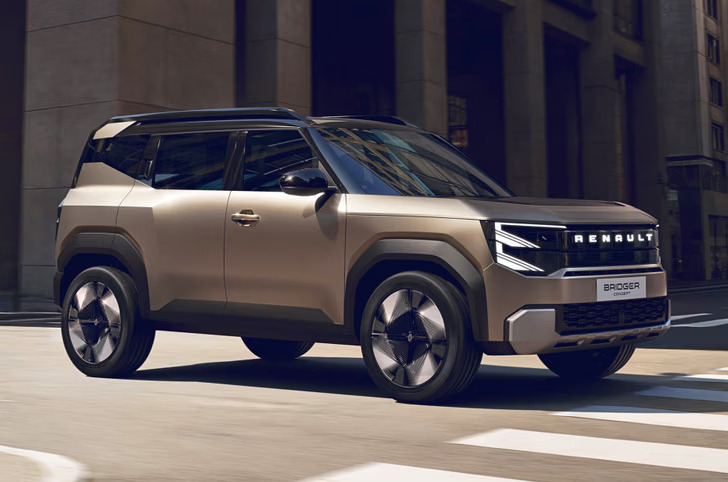
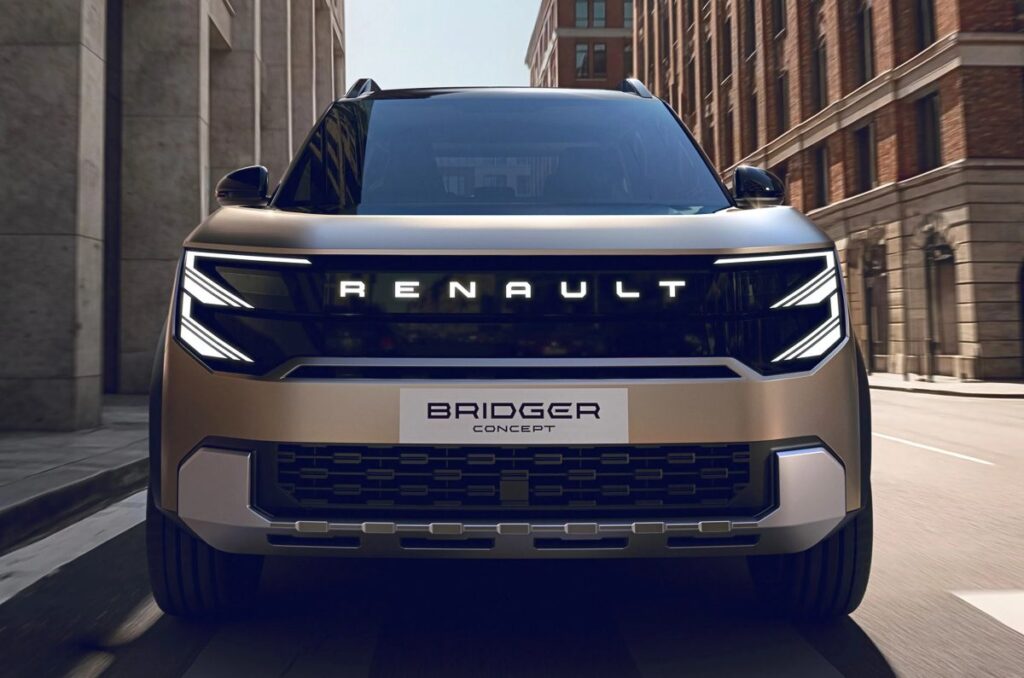
The Bridger doesn’t look like a car designed by committee — it looks like one designed to turn heads on Indian roads. The front is wide and confrontational, with aggressive strake-style LED headlamps bookending an illuminated ‘RENAULT’ wordmark. A chunky skid plate sits low beneath a muscular air dam, making clear this isn’t just a city runabout.
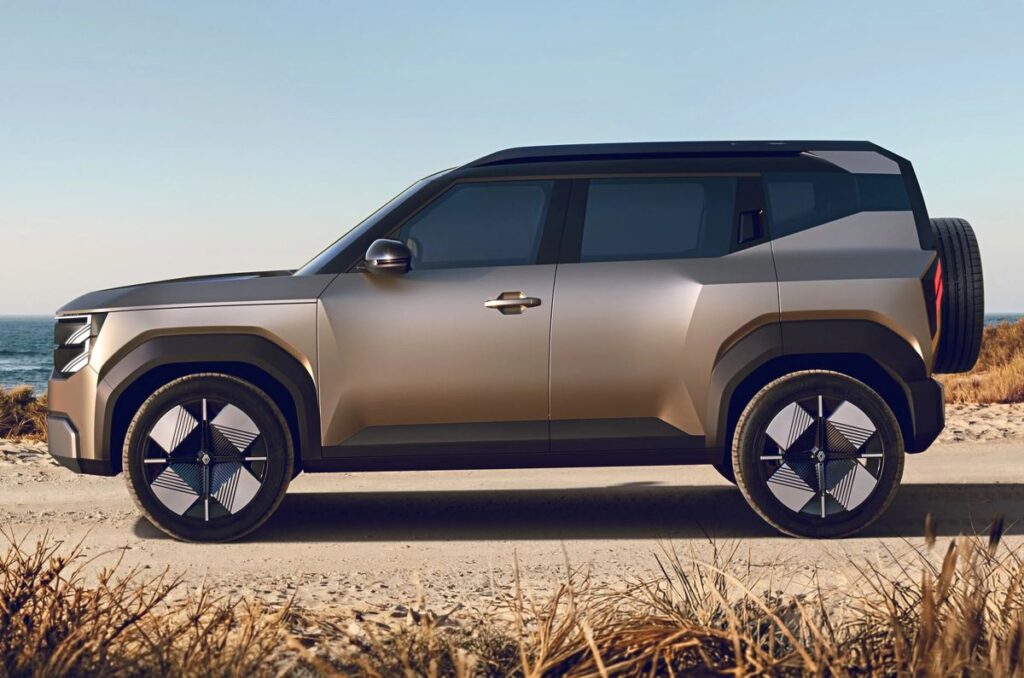
The side profile is equally purposeful. Squarish fenders, thick plastic arch cladding, and large 18-inch square-spoke alloys sit above 200mm of ground clearance — a number that should handle potholed Indian roads with ease. An unusual touch: the rear door handles are tucked into the C-pillar, keeping the body surface clean.
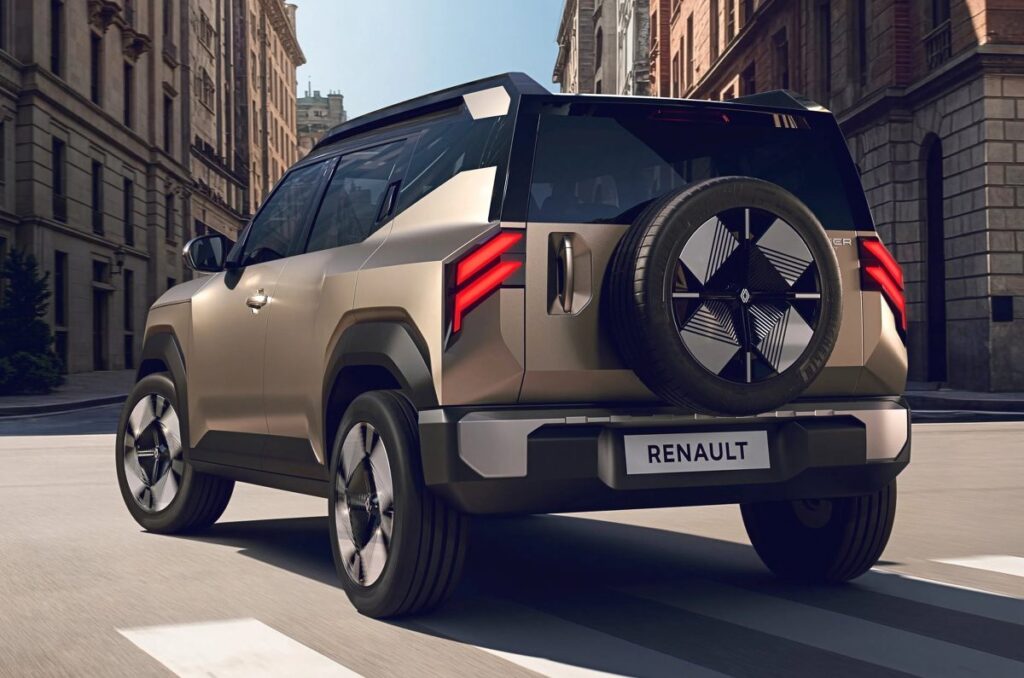
At the rear, a tailgate-mounted spare wheel — flanked by sharp LED tail lamps — is the most eye-catching detail. The slab-sided rear end and chunky bumper skid plate reinforce the rugged character, while a vertical handle hints at a side-opening tailgate for better urban access.
Interior: Spacious Despite Sub-4m Footprint
Renault has yet to fully reveal the Bridger’s cabin, but the numbers it’s dropping are hard to ignore. Rear knee room is pegged at 200mm — a segment-leading figure, the company claims. Boot volume stands at 400 litres, which is 10 litres ahead of the Kia Syros, the current compact SUV boot space benchmark. For a car under 4 metres, that’s genuinely impressive packaging work.
Powertrain: Petrol, Hybrid, and EV Under One Roof
Perhaps the most significant aspect of the Bridger isn’t the looks — it’s the powertrain breadth. Built on Renault’s R-GMP platform (the same modular architecture that underpins the new Duster), the Bridger will be offered as a “multi-energy” vehicle, meaning buyers can choose between a conventional petrol engine, a strong-hybrid setup, or a fully electric variant.
This is genuinely rare territory for the sub-4m SUV space in India. No current rival offers all three under one nameplate at this price point. Renault is also promising class-leading efficiency across the range — a bold claim it will need to back up with real-world numbers closer to launch.
Chennai-Made, Global Ambitions
Production of the Bridger will take place at Renault’s Chennai manufacturing plant, which will supply both Indian domestic demand and overseas export markets. This makes the Bridger a genuinely Indian car in the truest sense — designed here, built here, and shipped to the world.
With the compact SUV segment in India fiercely contested by the Maruti Brezza, Hyundai Venue, Tata Nexon, and Kia Sonet, Renault will be entering with a differentiated proposition: boxy design, class-leading boot, serious powertrain versatility, and an SUV identity that feels earned rather than marketed. If the production model delivers on the concept’s promise, the Bridger could become one of the more interesting launches of 2027.
Also Read – Nissan Leaf Crowned Women’s Worldwide Car of the Year 2026